
9senses on artificial intelligence
What is AI?
When most of us at 9senses began working with what is now labeled Artificial Intelligence, we didn't use that term. Back then, we were talking about non-linear computing, fuzzy logic, heuristics, machine learning, among others.
Today, many people think that AI makes computers as smart as humans. In reality, computer software is still far away from reaching that level, but it today is able to emulate and even surpass human capabilities in specific fields, particularly those that require the processing of large amounts of information or the generation of output from a large data pool. We would like to instill a bit of clarity here, at the cost of taking some of the magic of AI away, as did Joseph Weizenbaum, the legendary creator of Eliza:

“What I had not realized is that extremely short exposures to a relatively simple computer program could induce powerful delusional thinking in quite normal people.”
Joseph Weizenbaum (1923-2008), Inventor of Eliza
But what is AI really? We have asked two conversational AI systems about their definition of Artificial Intelligence and came back with quite divergent answers. Click to see what AI has to say on AI
After noticing how divergent the statements of those two AI systems were, we are no longer afraid of creating our own answer. We at 9senses define AI as "a computer system that is able to react to an event it has never experienced before in a meaningful way that is adequate to that event." This ability clearly distinguishes it from traditional computer logic where each event (or combination of events) has only one defined reaction. We explicitly stay away from comparing it with humans, because in some areas, computers are still eons away from reaching our abilities, while in others, they massively outperform us.
Key Fields of AI
There are various key AI technology areas, here is one of many ways to break it down:
Unless you're curious about the history of AI and our more philosophical views, you can now easily skip the rest of this page and move to what we can offer you.
interacting with AI
Natural Language Processing (NLP)
There is nothing more fascinating than being able to converse with computers in normal language - asking questions and receiving meaningful answers. Expected for more than half a century, the first time this was realistically possible was only a few years ago with the arrival of the first large language models.
When trying out ChatGPT or others, the results are indeed fascinating, and more and more companies are beginning to use these LLMs. As many companies also have already stopped using them in customer interactions or spend a lot of money fine-tuning them to avoid negative outcomes.
NLP offers fascinating opportunities to improve interactions with customers, internally and in providing knowledge in an easily accessible way. Yet it is one of the riskiest AI technologies to work with currently, and its use needs careful planning and testing.
Below are a number of examples of how to use NLP in an organization.
How it works
A few paragraphs, maybe a few images or two, with:
- Hardware
- Comparison
- Logic (ML/AI)
- 1-2 examples
- Limits and problems
All these use cases have two things in common. If implemented well, they can provide profoundly improved experiences. But if not properly trained and managed, LLM-driven solutions can become serious problems. At 9senses, we can help you find the right use cases, because we don't only know what LLMs can do, we also know their limitations and how to fine-tune them.
continuous improvement
Machine Learning
As formidably as the human eye collaborates with our brain and our muscles, today's AI tools can do a great job in processing visual information, particularly when it comes to recognizing certain patterns and spotting small differences that we have a hard time to even notice. The biggest advantages are that computers can't get tired and don't have problems working in environments where humans are unsafe or uncomfortable.
Below, we explain a few key applications of artificial intelligence in the processing of visual data, for example the use of optical character recognition (OCR) together with natural language processing (NLP), the tracking of movements, or the recognition of patterns to determine crowd sizes or identify certain items.
How it works
A few paragraphs, maybe a few images or two, with:
- Hardware
- Comparison
- Logic (ML/AI)
- 1-2 examples
- Limits and problems
recognizing things
Computer Vision
As formidably as the human eye collaborates with our brain and our muscles, today's AI tools can do a great job in processing visual information, particularly when it comes to recognizing certain patterns and spotting small differences that we have a hard time to even notice. The biggest advantages are that computers can't get tired and don't have problems working in environments where humans are unsafe or uncomfortable.
Below, we explain a few key applications of artificial intelligence in the processing of visual data, for example the use of optical character recognition (OCR) together with natural language processing (NLP), the tracking of movements, or the recognition of patterns to determine crowd sizes or identify certain items.
How it works
A few paragraphs, maybe a few images or two, with:
- Hardware
- Comparison
- Logic (ML/AI)
- 1-2 examples
- Limits and problems
Creating actions
Robotics
Creating autonomous systems that can perform physical actions, like driving a vehicle based on controlling equipment using sensor input and logic, is a key field of AI, albeit still a difficult one.
How it works
Your content goes here. Edit or remove this text inline or in the module Content settings. You can also style every aspect of this content in the module Design settings and even apply custom CSS to this text in the module Advanced settings.
History of AI
1816: Fiction
1
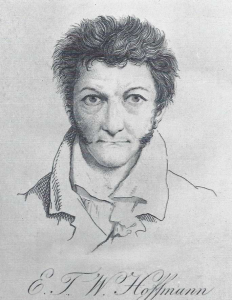
The idea of "automatons" acting "intelligent" is much older than computers themselves. For example, in ETA Hoffmann's "The Sandman", published in 1816, a beautiful girl named Olimpia is introduced. She dances and sings beautifully, but only speaks a few words. In fact, she is an automaton, created by physics professor Spalanzani.
1940s: The Turing Test

With the appearance of the first computers in the 1940s, the fascination with the technology quickly led to the idea that they could soon perform as intelligently as humans. In 1949, British mathematician and computer scientist Alan Turing devised a test to evaluate when a computer would be able to emulate a human conversation convincingly. It took 65 years for the first simulation to narrowly pass.
2
1966: Eliza
3
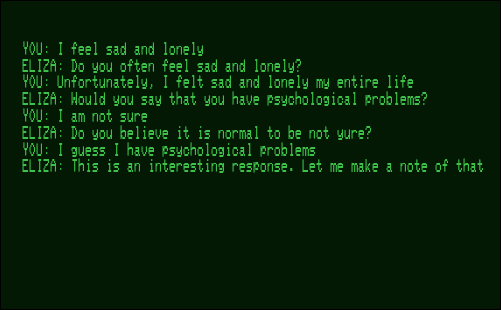
When American psychologist Joseph Weizenbaum created chat program "Eliza" in 1966, simulating the dialogue with a psychologist, it was meant like a playful first attempt at processing natural speech. Even though the logic behind it was very simple, many people considered it intelligent and expected computers to be able to speak like humans soon.
1980s: Machine Learning
With increasingly powerful computers and larger storage capabilities that were able to handle large datasets, the first successful machine learning approaches were introduced. They were based on the ability to autonomously find patterns in data, relate them back to certain events and conditions and suggest or take action.
4
1990s: Playing Chess (and Winning)
5
In 1997, IBM's Deep Blue supercomputer won its first match against acting chess campion Garry Kasparov. While mostly driven by sheer power which helped build its game on computing more than 200 million positions a second, it was using machine learning elements (heuristics and minimax optimization techniques) mid-game, which can be considered AI.

2000s: Seeing and Knowing
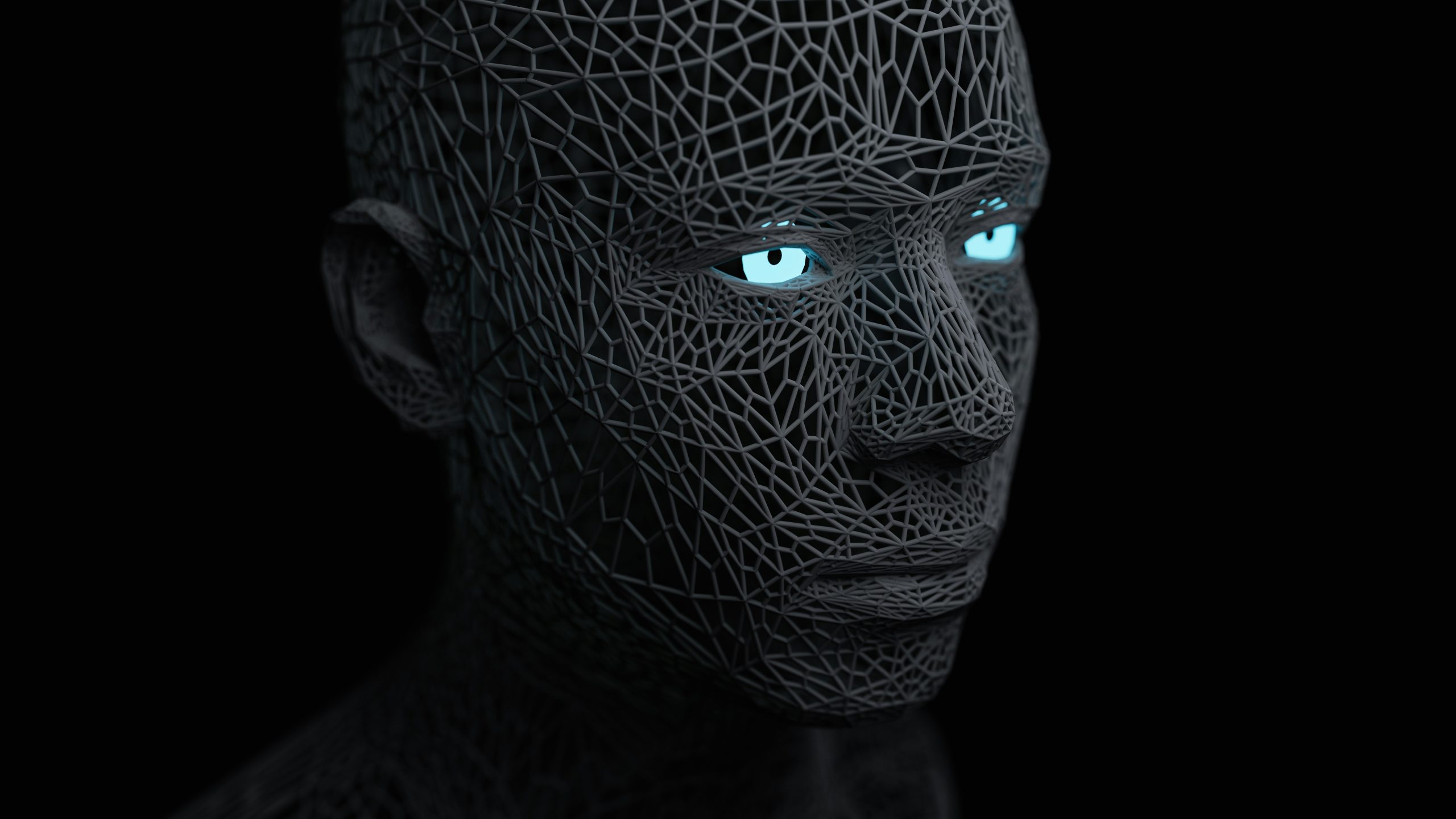
While optical character recognition (OCR) had been developed long ago, computers became capable of "seeing" in the late 20th and the early 21st century. This is when the first face and object recognition systems were developed. By now, AI is able to routinely identify people and objects and also understand what they are doing.
6
2010s: Solving Complex Problems
7
The previous decade was the era where all previous efforts in making computers act "intelligently" came together, and where many breakthroughs shifted public attention towards the term "Artificial Intelligence" again, after it had been rarely used since the 1970s. By 2010, normal desktop and laptop computers were strong enough to perform AI tasks.

2020s: Listening and Speaking
Finally, conversational AI is able to have conversations with humans based on Large Language Models that have been released. Those models are routinely able to pass the Turing Test, which means that they are able to understand and communicate back in natural language.
8
Your Title Goes Here
Your content goes here. Edit or remove this text inline or in the module Content settings. You can also style every aspect of this content in the module Design settings and even apply custom CSS to this text in the module Advanced settings.
Talk to Eliza
This is a faithful representation of the 1966 Eliza version created by Joseph Weizenbaum. It was reproduced by Anthony Hay in C++ based on the original 1965 code and updated by behavior transcripts of the final version.
Note: The paper version emulates Joseph Weizenbaum's original 1966 ELIZA as it ran on the CTSS time-sharing system (IBM 7094) at MIT, accessed via an IBM Selectric-based hardcopy terminal. On CTSS the question mark served as the line-delete (line-kill) control character, so it could not appear in typed input — and the DOCTOR script accordingly produced no question marks. They are therefore suppressed here, on both sides of the conversation. The green "terminal" version enables question marks instead; it represents a glowing CRT display of a kind that did not exist for ELIZA in 1966 and evokes a later era of computing.
Play Chess like 1997 (Deep Blue Style)
Here's our simulation of Deep Blue. You can play against Stockfish (able to run on a laptop today with similar strength compared to Deep Blue). Bonus: you can replay the legendary 1997 rematch where Deep Blue won against Garry Kasparov.