
recognizing things
Computer Vision
As formidably as the human eye collaborates with our brain and our muscles, today's AI tools can do a great job in processing visual information, particularly when it comes to recognizing certain patterns and spotting small differences that we have a hard time to even notice. The biggest advantages are that computers can't get tired and don't have problems working in environments where humans are unsafe or uncomfortable.
Below, we explain a few key applications of artificial intelligence in the processing of visual data, for example the use of optical character recognition (OCR) together with natural language processing (NLP), the tracking of movements, or the recognition of patterns to determine crowd sizes or identify certain items.
| Language | Common Crawl Share (CC-MAIN-2026-12) | Total Speakers | Share of World Population | Ratio (Web vs. Speakers) |
|---|---|---|---|---|
| English | 41.06 % | ~1.53 billion | ~18.7 % | 2.2x |
| German | 5.98 % | ~135 million | ~1.6 % | 3.7x |
| Chinese | 4.99 % | ~1.18 billion | ~14.4 % | 0.35x |
| Spanish | 4.66 % | ~560 million | ~6.8 % | 0.7x |
| French | 4.61 % | ~310 million | ~3.8 % | 1.2x |
| Italian | 2.38 % | ~90 million | ~1.1 % | 2.2x |
| Hindi | 0.22 % | ~610 million | ~7.4 % | 0.03x |
How it works
A few paragraphs, maybe a few images or two, with:
- Hardware
- Comparison
- Logic (ML/AI)
- 1-2 examples
- Limits and problems
Unless you're curious about the history of AI and our more philosophical views, you can now easily skip the rest of this page and move to what we can offer you.
Unless you're curious about the history of AI and our more philosophical views, you can now easily skip the rest of this page and move to what we can offer you.
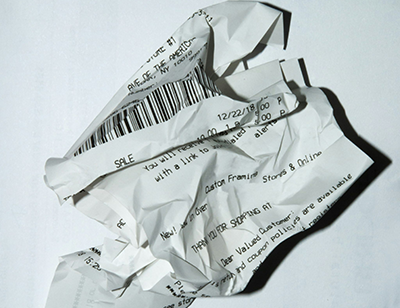
Reading
Documents
Optical Character Recognition (OCR) has been around for a while, but it only becomes really powerful when combined with Artificial Intelligence. This enables understanding almost any document in your business context, filling data tables accurately, and taking decisions about how to handle the input.

Finding Irregularities
Finding patterns in still and moving images, and detecting even the smallest changes is something AI solutions do much better than the human eye, which is trained on filtering out unimportant things. No matter if it concerns identifying irregularities in assembly lines or finding trespassers where no humans should be, AI does a great job here.
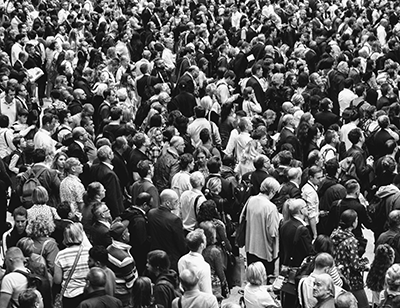
Counting
and Sorting
How many people are in this crowd? Is an item that comes from the assembly line complete? How much water is flowing in this river? These are questions that can be answered easily by well-trained AI solutions. They often can replace complicated and expensive sensing technologies or hours and hours of human labor.

Item
Recognition
Finding patterns in still and moving images, and detecting even the smallest changes is something AI solutions do much better than the human eye, which is trained on filtering out unimportant things. No matter if it concerns identifying irregularities in assembly lines or finding trespassers where no humans should be, AI does a great job here.

Tracking
Motion
Tracking and interpreting even the smallest motion is something we can do with AI today. Not only under normal circumstances, but also at night and following events happening at high speed. This enables us to find out what is happening, identify irregularities in assembly lines or trespassers on a site, hardly any problem is unsolvable.
Talk to Eliza
This is a faithful representation of the 1966 Eliza version created by Joseph Weizenbaum. It was reproduced by Anthony Hay in C++ based on the original 1965 code and ubpdated by behavior transcripts of the final version.
Note: The paper version emulates Joseph Weizenbaum's original 1966 ELIZA as it ran on the CTSS time-sharing system (IBM 7094) at MIT, accessed via an IBM Selectric-based hardcopy terminal. On CTSS the question mark served as the line-delete (line-kill) control character, so it could not appear in typed input — and the DOCTOR script accordingly produced no question marks. They are therefore suppressed here, on both sides of the conversation. The green "terminal" version enables question marks instead; it represents a glowing CRT display of a kind that did not exist for ELIZA in 1966 and evokes a later era of computing.
Play Chess like 1997 (Deep Blue Style)
Here's our simulation of Deep Blue. You can play against Stockfish (able to run on a laptop today with similar strength compared to Deep Blue). Bonus:: you can replay the legendary 1997 rematch where Deep Blue won against Garry Kasparov.