
Dinge sehen und erkennen
Bildverarbeitung
As formidably as the human eye collaborates with our brain and our muscles, today's AI tools can do a great job in processing visual information, particularly when it comes to recognizing certain patterns and spotting small differences that we have a hard time to even notice. The biggest advantages are that computers can't get tired and don't have problems working in environments where humans are unsafe or uncomfortable.
Below, we explain a few key applications of artificial intelligence in the processing of visual data, for example the use of optical character recognition (OCR) together with natural language processing (NLP), the tracking of movements, or the recognition of patterns to determine crowd sizes or identify certain items.
| Sprache | Common Crawl Share (CC-MAIN-2026-12) | Sprecher weltweit | Share of World Weltbevölkerung in % | Verhältnis (Web vs. Sprecher) |
|---|---|---|---|---|
| Englisch | 41.06 % | ~1.53 billion | ~18.7 % | 2.2x |
| Deutsch | 5.98 % | ~135 million | ~1.6 % | 3.7x |
| Chinesisch | 4.99 % | ~1.18 billion | ~14.4 % | 0.35x |
| Spanisch | 4.66 % | ~560 million | ~6.8 % | 0.7x |
| Französisch | 4.61 % | ~310 million | ~3.8 % | 1.2x |
| Italienisch | 2.38 % | ~90 million | ~1.1 % | 2.2x |
| Hindi | 0.22 % | ~610 million | ~7.4 % | 0.03x |
Wie es funktioniert
A few paragraphs, maybe a few images or two, with:
- Hardware
- Comparison
- Logic (ML/AI)
- 1-2 examples
- Limits and problems
Wenn Sie mehr über die Geschichte von Künstlicher Intelligenz und unsere eher philosophische Sicht darauf erfahren möchten, geht es unten weiter. Andernfalls erfahren Sie hier, wie wir Sie bei KI-Themen unterstützen können.
Wenn Sie mehr über die Geschichte von Künstlicher Intelligenz und unsere eher philosophische Sicht darauf erfahren möchten, geht es unten weiter. Andernfalls erfahren Sie hier, wie wir Sie bei KI-Themen unterstützen können.
Reading
Documents
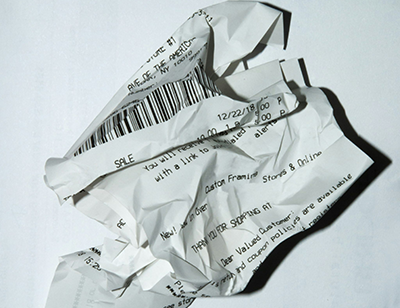
Schon länger kann man mit Hilfe von OCR (Optical Character Recognition) Zeichen in gedruckten Dokumenten scannen. Wirklich leistungsfähig wird diese Technologie, wenn sie mit KI kombiniert Inhalte plausibilisieren, Daten am richtigen Ort speichern und direkt auf ein Dokument reagieren kann.

Unregelmäßigkeiten finden
Finding patterns in still and moving images, and detecting even the smallest changes is something AI solutions do much better than the human eye, which is trained on filtering out unimportant things. No matter if it concerns identifying irregularities in assembly lines or finding trespassers where no humans should be, AI does a great job here.
Counting
and Sorting
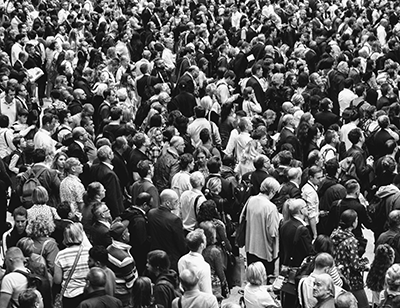
Wie viele Menschen sind auf diesem Bild? Ist ein Produkt komplett und äußerlich fehlerfrei? Wie viel Wasser läuft gerade durch diesen Fluß? Das sind Fragen, die eine gut trainierte KI-Lösung sehr gut beantworten und oft komplexe und teure Messeinrichtungen oder viele Stunden menschlicher Arbeit ersetzen kann.
Item
Recognition
Finding patterns in still and moving images, and detecting even the smallest changes is something AI solutions do much better than the human eye, which is trained on filtering out unimportant things. No matter if it concerns identifying irregularities in assembly lines or finding trespassers where no humans should be, AI does a great job here.

Tracking
Motion
Das Verfolgen und Auswerten selbst kleinster Bewegungen ist eine Spezialität von KI - nicht nur unter normalen Bedingungen, sondern auch nachts und bei hoher Geschwindigkeit. Das ermöglicht es, Vorgänge zu analysieren und darauf vielfältige Schlüsse zu ziehen.
Mit Eliza reden
This is a faithful representation of the 1966 Eliza version created by Joseph Weizenbaum. It was reproduced by Anthony Hay in C++ based on the original 1965 code and ubpdated by behavior transcripts of the final version.
Note: The paper version emulates Joseph Weizenbaum's original 1966 ELIZA as it ran on the CTSS time-sharing system (IBM 7094) at MIT, accessed via an IBM Selectric-based hardcopy terminal. On CTSS the question mark served as the line-delete (line-kill) control character, so it could not appear in typed input — and the DOCTOR script accordingly produced no question marks. They are therefore suppressed here, on both sides of the conversation. The green "terminal" version enables question marks instead; it represents a glowing CRT display of a kind that did not exist for ELIZA in 1966 and evokes a later era of computing.
Play Chess like 1997 (Deep Blue Style)
Here's our simulation of Deep Blue. You can play against Stockfish (able to run on a laptop today with similar strength compared to Deep Blue). Bonus:: you can replay the legendary 1997 rematch where Deep Blue won against Garry Kasparov.