
9senses on artificial intelligence
What AI really is…
When most of us at 9senses began working with what is now labeled Artificial Intelligence, we didn't use that term. Back then, we were talking about non-linear computing, fuzzy logic, heuristics, machine learning, among others.
Today, many people think that AI makes computers as smart as humans. In reality, computer software is still far away from reaching that level, but today it is able to emulate and even surpass human capabilities in specific fields, particularly those that require the processing of large amounts of information or the generation of output from a large data pool. We would like to instill a bit of clarity here, at the cost of taking some of the magic of AI away, as did Joseph Weizenbaum, the legendary creator of Eliza:
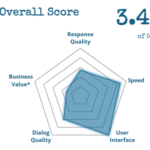 The 9senses Chatbot Audit evaluates the performance of your chatbot from a user perspective.
 Before AI, testing followed specific cycles and became a key part of all DevOps procedures. With AI, things change with every turn. How do quality assurance and testing keep up?
 When we are using generative AI, to create new output we are exploiting knowledge previously generated by humans. But who is rebuilding knowledge for the next generation?
 9senses Market Analysis: Only 16 out of 129 automotive providers in the DACH region use AI chatbots for customer service - with significant variations in quality
 AI lets us skip the slow, clumsy, error-prone work of becoming competent. The bill for that shortcut arrives in the future, when the people who were supposed to replace today's…
 Large Language Models judge your work differently every time you ask. That is not just a quirk of the technology - it is a fundamental challenge to how we create,…
 AI hallucinations aren't random - they cluster, systematically and predictably, in the topics you cannot independently verify.
“What I had not realized is that extremely short exposures to a relatively simple computer program could induce powerful delusional thinking in quite normal people.”
Joseph Weizenbaum (1923-2008), Inventor of Eliza
History of AI
The idea of a machine-driven intelligence is not new. Literature has come up with speaking automatons way before the steam engine was invented, and since the arrival of computers, we have hoped for and feared AI smarter than humans.
Fiction

But what is AI really? We have asked two conversational AI systems about their definition of Artificial Intelligence and they came back with quite divergent answers. Click to see what AI has to say on AI
With two differing statements from two AI systems, we are not afraid of creating our own answer. We at 9senses define AI as "a computer system that is able to react to an event it has never experienced before in a meaningful way that is adequate to that event, based on the analysis of many similar events from data." This ability clearly distinguishes it from traditional computer logic where each event (or combination of events) has only one defined reaction. We explicitly stay away from comparing it with humans, because in some areas, computers are still eons away from reaching our abilities, while in others, they massively outperform us.
Key Fields of AI
There are various key AI technology areas, here is one of many ways to break them down:
Machine Learning
Finding patterns in large datasets and drawing conclusions is at the core of most AI applications these days. Machine Learning provides the statistical methods to make it happen.
Natural Language Processing
Being able to communicate with humans is one of the most recent key AI developments that helps interact with computers, for example in customer-facing IT.
Computer Vision
Finding items and differences in still or moving imagery is something that computers excel at, for example when it comes to surveillance, irregularity detection or simply - counting.
Robotics
Creating autonomous systems that perform physical actions, like driving a vehicle based on controlling equipment using sensor input and logic, is a key field of AI, albeit a difficult one.
Whichever AI field you look at, whether NLP, Computer Vision or Robotics, it is usually Machine Learning doing the actual work underneath: models learn from historical data and apply what they have learned to data they have never seen before. Or, as Wikipedia puts it: "Machine Learning is a field of study in artificial intelligence concerned with the development of statistical algorithms that can learn from data and generalize to unseen data; and thus perform tasks without explicit instructions."
How machine learning works
Machine learning is not a static flow of logical routines. It is a system that finds useful patterns in examples, turns those patterns into a model and applies the model to new situations.
01Start with examples
Machine learning starts with examples: documents, cases, sensor values, customer conversations or business events. The decisive question is not quantity alone, but whether the data represents the decisions the model should later support - and whether it is worth the cost of collecting and cleaning it.
Key concept
Supervised learning works from labeled examples; unsupervised learning finds structure in unlabeled data; reinforcement learning improves by trial and error through feedback.
In practice
To predict machine failures, operational data is matched with recorded failures so the system has examples to learn from.
The Challenges
Machine Learning has important limitations. It heavily depends on the quality and quantity of the underlying data to find the relevant statistical patterns. Bad data leads to incorrect outcomes.
As machine learning - like all "AI" - doesn't really understand the context on an abstract level, it needs clear guidance during training and reviews, often coupled with additional boundaries set by humans.
This becomes particularly difficult when the model itself is intransparent and becomes a "black box", where it remains unclear what patterns drive decisions made by ML. Thus, careful governance is essential, particularly in areas with high impact.
Featured Projects
Intelligent Data Retrieval Agent
Production-ready AI retrieval system using LLMs and semantic search to transform fragmented data into reliable, searchable knowledge.
read more…Visual Search Recommendations
eCommmerce plugin that enables searching for visually similar products, helping customers to find and compare multiple related items.
read more…Visual Assistance for Seniors
Visual Assistance App: enabling visual assistance for seniors by helping position determination using Computer Vision and Deep Learning.
read more…Electrical Switch Monitor
Public transportation: using AI-driven vision to monitor old-fashioned electrical relays and also to evaluate potential failures for predictive maintenance.
read more…Hydropower Plant Operations
Create a control and monitoring solution for all plant operations, including predictive maintenance logic and intrusion monitoring.
read more…Customer Interaction Analysis
SaaS project platform: the objective was to evaluate dialogue quality using an AI model to ensure timely intervention and customer care.
read more…Motion-sensitive wearables
Wearable fabric-based devices with embedded microcontrollers and sensitivity for motion, heartbeat, body temperature and sweat detection.
read more…Development of a production-ready retrieval agent for querying large, fragmented, and undocumented enterprise data repositories using large language models and semantic search. The solution transformed scattered legacy records into structured, searchable knowledge, enabling users to retrieve relevant information within seconds instead of manually searching across hundreds of documents.
The project combined retrieval-augmented generation (RAG), vector search, and modern LLM technologies to deliver reliable, context-aware information retrieval. Designed with a modular architecture, the system supports scalability, maintainability, and future extensions while ensuring robust retrieval quality across heterogeneous data sources.
AI Engineer
Python • LangChain • OpenAI • Qdrant • Semantic Search • RAG • Streamlit
For VisualSearch, the focus was on developing and deploying e-commerce plugins to enhance recommendation functionalities in web shops. The plugins were successfully launched in the store and happily adopted by customers, demonstrating their practical use in improving e-commerce experiences. Key elements included:
- computation of visual embeddings from appearances of e-commerce products
- building and maintaining a search index using these embeddings
- providing a cloud-based API for Shopware and Prestashop plugins
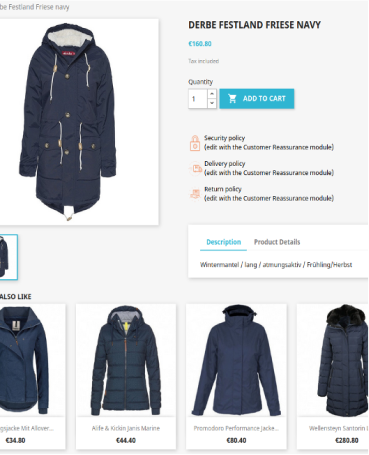
Peter acted as the project manager and key data scientist on this project, leveraging AWS services, Python, and deep learning frameworks like Keras. The project integrated cloud-based solutions using CloudFormation, Lambda, and Gateway for scalable and efficient deployment, using SQL and DynamoDB for data management.
For the Austrian Institute of Technology (as a part of the national research project LARAH), a prototype of an assistance system for visual indoor localization for disabled and elderly persons was developed. By leveraging Computer Vision and Deep Learning, innovative algorithms for position determination were implemented. The project resulted in a functional prototype, including two Android applications for real-time localization. Key elements included:
- visual recognition of persons using Deep-Learning models
- visual reconstruction and localization of indoor environments using Structure-from-Motion and Machine Learning algorithms
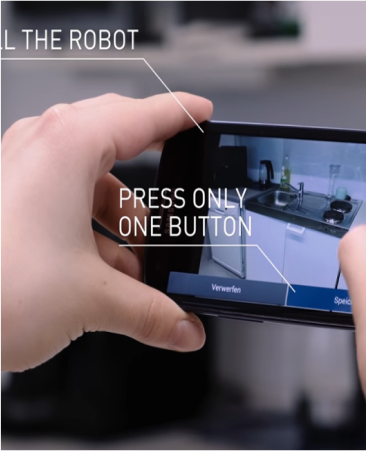
Peter acted as the project manager and key data scientist on this project, developed under Python using Deep Learning models like TensorFlow, custom-developed Structure-from-Motion software and custom camera calibration software. Additionally, as a part of the project, two Android apps were modified and integrated together onto the Robot Operating System on the mobile platform.
For a public transportation network, the objective was to optimize the monitoring of their legacy electrical switchboards. These decade-old items that are often located in very remote areas are prone to failures and tracking of errors was not possible. The objective was to enable real-time tracking and the recognition of upcoming failures from changed switching behavior. The key elements were:
- Development of specific hardware configuration with custom housings (3D printed) to mount instead of regular switchboard covers;
- Camera control and initial image generation on Raspberry Pi integrated in housing;
- Initial scan of switch layout and labels;
- Identification of switching operations and registration of new positions;
- Identification of irregular switching patterns (delays, other irregularities) to indicate upcoming failures for predictive maintenance;
- Update of central database and cloud solution with last state and observed switching patterns;
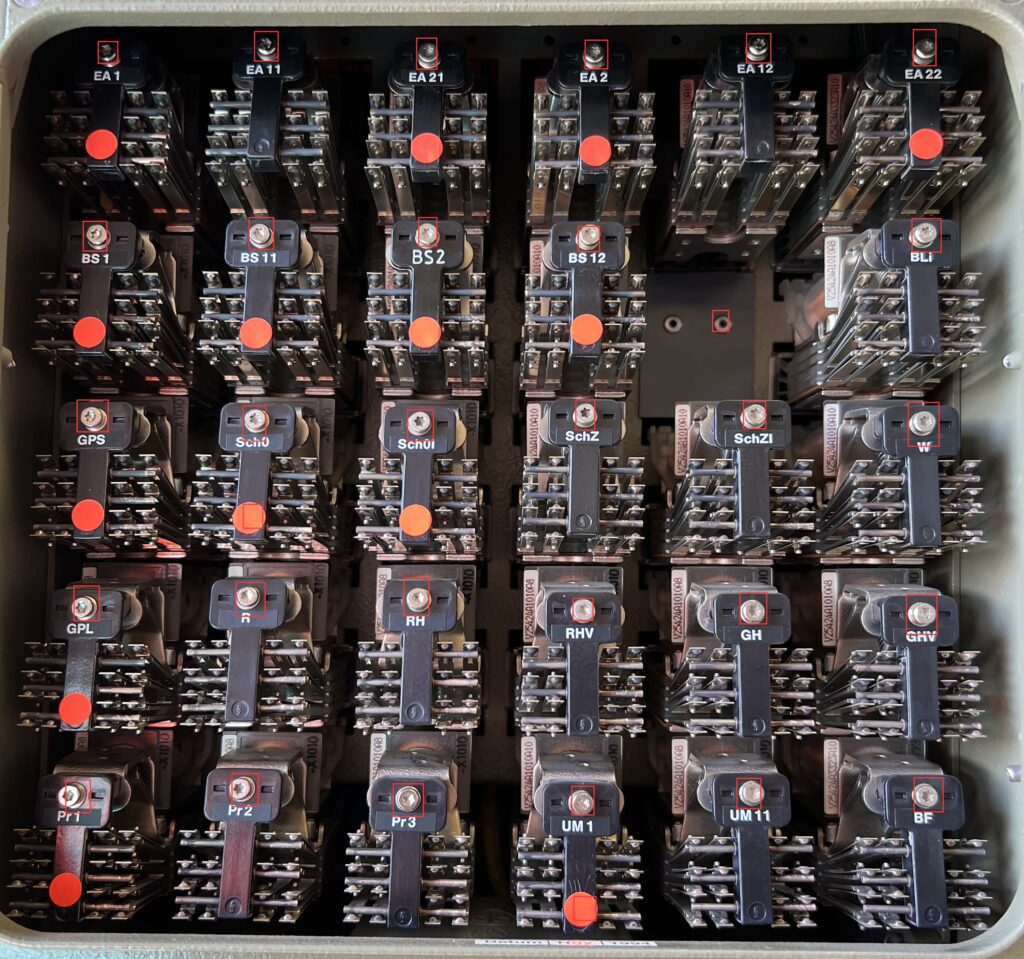
The solution was implemented using Python on Raspberry Pi devices, backbone and cloud processing were done using a LAMP stack, with PyTorch, TensorFlow and OpenCV.
Create an integrated monitoring and surveillance solution for small-scale hydropower plants in remote locations. The solution included a full range of required settings:
- real-time monitoring and logging of operations
- failure detection and automated
- predictive maintenance logic to identify early failure
- camera-based intrusion and irregularity detection
The solution was a hybrid solution using Siemens PLCs, combined with small edge computing elements (Raspberry Pi and Arduino). All primary logic (particularly shutdown and load adjustment) was local, but key decisions and aggregations were executed online based on regular data transmission to a cloud-based management and operations suite.
For a project management SaaS solution where customers were matched with freelancers, a custom AI solution was established with the purpose to improve experiences for all parties. Key purposes were to create an early warning system to help customer service intervene in case of issues:
- Identification of unusual patterns (delays indicating inaction, intense exchanges);
- Flagging of language transgressions on both sides (use of inappropriate language, aggression);
- Matching of final ratings with evaluation of flow and dialogue quality to foster a more honest rating culture;
- Language style matching to improve future matching of freelancers to clients;
The solution was implemented using Python on a LAMP stack, with self-developed machine learning libraries.
Arduino-based, with edge ml functionality and periodic link via BLE to connected phone. Machine learning algorithms on cloud detecting various health states and delivering alerts to phone or web app. All logic woven into a cotton fabric wristband.
There is nothing more fascinating than being able to converse with computers in normal language: asking questions and receiving meaningful answers. Expected for more than half a century, this only became realistically possible a few years ago with the arrival of the first large language models. These LLMs, like ChatGPT or Gemini, have since moved from research milestone to everyday business tool, from employee support to customer interactions.
How NLP works
Natural language processing turns text into tokens, vectors and probabilities. A model is built once through training, then runs that mechanism live on every request. The same machinery makes it useful and explains why language gaps and errors remain.
01Collect text
Training begins with large text collections. The model learns the statistical shape of the material it sees. Because web-scale corpora are often English-heavy, language coverage is uneven from the start unless the project deliberately compensates for it.
Background
NLP goes back to the 1950s and rule-based machine translation. Statistical methods took over in the 1990s and 2000s; deep learning and large language models brought the breakthrough of the 2010s.
Watch out
A model reproduces any falsehood or bias present in the material it was trained on - the corpus is destiny.
The Challenges
No matter how "human" they sound, NLP systems face important system-defined limitations. They can easily produce fluent but factually incorrect or misleading information. They also reproduce any falsehood or bias in the information available when trained.
As NLP systems are solely based on statistical patterns and have only limited contextual understanding, they can struggle with reasoning, and consistency. Also, they are solely based on the input provided during training and feedback during operations. This is particularly problematic with large open models.
Training large models requires significant resources and raises concerns about privacy, misinformation, and misuse. Human supervision and critical evaluation are thus essential.
Featured Projects
RAG-driven Legal Chatbot
A small-to-medium language model reliably answering German legal questions based on a strong RAG pipeline.
read more…Generative AI Audit Framework
Development of a structured Generative AI audit framework. This included establishing a methodology for Level 1 and Level 2 GenAI audits
read more…Intelligent Data Retrieval Agent
Production-ready AI retrieval system using LLMs and semantic search to transform fragmented data into reliable, searchable knowledge.
read more…RAG-Based Enterprise Knowledge Assistant
Designed RAG-based AI assistants that turn fragmented documents and expert knowledge into accessible, context-aware enterprise knowledge.
read more…Customer Interaction Analysis
SaaS project platform: the objective was to evaluate dialogue quality using an AI model to ensure timely intervention and customer care.
read more…An AI-supported RAG-Chatbot developed for legal and administrative workflows. Designed to support caseworkers in navigating complex regulations - currently focused on German Social Welfare - the system provides fast, contextual access to relevant legal information and assists in decision-making for applications and case management. The modular architecture allows seamless expansion into additional legal domains and regulatory frameworks.
Development of a multidimensional Blackbox Chatbot Audit framework for evaluating chatbot user experience and business value in customer service environments. The audit methodology combines structured use-case testing with qualitative and quantitative evaluation dimensions, including answer quality, response speed, dialogue quality, and user interface assessment.
The framework also incorporates hallucination testing and edge-case analysis to assess robustness and real-world usability. The project included extensive market and user-frustration research, methodology development, pilot implementation, and iterative testing and retesting phases. The resulting audit framework is used to evaluate chatbot performance, identify optimization potential, and assess user retention likelihood and overall business impact.
Development of a production-ready retrieval agent for querying large, fragmented, and undocumented enterprise data repositories using large language models and semantic search. The solution transformed scattered legacy records into structured, searchable knowledge, enabling users to retrieve relevant information within seconds instead of manually searching across hundreds of documents.
The project combined retrieval-augmented generation (RAG), vector search, and modern LLM technologies to deliver reliable, context-aware information retrieval. Designed with a modular architecture, the system supports scalability, maintainability, and future extensions while ensuring robust retrieval quality across heterogeneous data sources.
AI Engineer
Python • LangChain • OpenAI • Qdrant • Semantic Search • RAG • Streamlit
Gerold designed and developed concepts and prototypes for RAG-based AI assistants that make fragmented organizational knowledge accessible through natural-language interaction.
The solutions combine internal documents, structured information and expert knowledge with Large Language Models, semantic search and retrieval-augmented generation. The focus is not only on the underlying technology, but on creating a reliable end-to-end solution: from identifying and structuring relevant knowledge sources to retrieval architecture, user experience, access concepts and governance.
The work demonstrates how Generative AI can transform static document repositories into practical knowledge systems that support employees in finding information faster, preserving expert knowledge and making better-informed decisions.
AI Strategy & Solution Design, Generative AI, LLMs, RAG, Prompt Design, Knowledge Management
For a project management SaaS solution where customers were matched with freelancers, a custom AI solution was established with the purpose to improve experiences for all parties. Key purposes were to create an early warning system to help customer service intervene in case of issues:
- Identification of unusual patterns (delays indicating inaction, intense exchanges);
- Flagging of language transgressions on both sides (use of inappropriate language, aggression);
- Matching of final ratings with evaluation of flow and dialogue quality to foster a more honest rating culture;
- Language style matching to improve future matching of freelancers to clients;
The solution was implemented using Python on a LAMP stack, with self-developed machine learning libraries.
As formidable as the interplay of the human eye, brain and muscles is, it evolved to focus on what matters and filter out the rest. Machine vision has no such filter: it inspects every pixel with the same attention, frame after frame, around the clock. It never gets tired, and it works reliably in environments where humans are unsafe or uncomfortable.
How computer vision works
Computer vision turns visual signals into numerical data - an image is a grid of numbers - then extracts task-relevant patterns and produces structured outputs such as labels, locations, masks, text, measurements or motion. It does not see as a person does; it estimates probabilities from visual evidence learned for a specific purpose.
01Measure the scene
Computer vision begins with a sensor: a camera, scanner, microscope, satellite, X-ray device, thermal imager or depth sensor. Lens, viewpoint, exposure, resolution and frame rate determine which evidence enters the system. Detail that was never captured cannot be reconstructed reliably later.
Background
Early computer vision began in the 1960s and 1970s with programs recognizing simple shapes - and with optical character recognition (OCR) for typed documents as one of the first practical uses.
In practice
Camera choice, placement and lighting often decide project success before any model is trained.
The Challenges
Despite their capabilities often surpassing human vision, Computer Vision systems have limitations. They struggle with unknown information, unfamiliar conditions, or overlapping objects. Equally, while they can even detect the smallest changes, learning what is relevant and what isn’t can be hard.
Another concern is bias, for example, when it comes to facial recognition. Often, due to biased training data, their accuracy varies across different ethnic groups. And ultimately, they do not “recognize” items, but only statistical patterns. This can create dangerous errors, for example in facial recognition. As with all tools, careful oversight and governance are required.
Additionally, the challenges emerging from image generation create entirely new ethical and regulatory problems.
Featured Projects
International Process Digitalization in Facility Management
Transformation and standardization of international facility management processes through the introduction of scalable structures.
read more…ERP/CRM Product Development & Process Digitalization
Development and implementation of a modular ERP/CRM system to digitalize central business processes.
read more…Visual Search Recommendations
eCommmerce plugin that enables searching for visually similar products, helping customers to find and compare multiple related items.
read more…Visual Assistance for Seniors
Visual Assistance App: enabling visual assistance for seniors by helping position determination using Computer Vision and Deep Learning.
read more…Electrical Switch Monitor
Public transportation: using AI-driven vision to monitor old-fashioned electrical relays and also to evaluate potential failures for predictive maintenance.
read more…Hydropower Plant Operations
Create a control and monitoring solution for all plant operations, including predictive maintenance logic and intrusion monitoring.
read more…Supported the transformation and standardization of international facility management processes by designing scalable end-to-end process and service structures.
The project included gathering and harmonizing requirements across multiple country organizations, translating business needs into digital process and system solutions, and coordinating international rollouts including SIT, UAT, training, and change management.
Consistent process modeling and documentation using BPMN 2.0 and SAP Signavio helped establish sustainable governance, transparency, and operational efficiency.
SAP Signavio, BPMN 2.0, ERP Systems, Digital Workflow Platforms, Interface Integration, SIT/UAT, Requirements Management
- Computer Vision
- Automation
- Infrastructure Management
- Human-Technology Interaction
Led the development and implementation of a modular ERP/CRM system to digitalize central business processes.
The project included end-to-end product ownership, requirements analysis, prioritization, and scaling of the system, including mobile solutions and extensions.
Responsibilities also covered the management of cross-functional development teams, the establishment of testing, quality, and operations processes, and the introduction of ITIL-based change and incident structures. Governance, KPI, PMO, and documentation standards were developed to support sustainable product and project management, while product strategy and stakeholder alignment were managed at leadership level.
ERP/CRM Systems, Mobile Solutions, Agile Product Development, Requirements Management, UAT, ITIL, Change & Incident Management, KPI/PMO Structures, Stakeholder Management
- Computer Vision
- Automation
- Infrastructure Management
- Data Warehouse
- Human-Technology Interaction
For VisualSearch, the focus was on developing and deploying e-commerce plugins to enhance recommendation functionalities in web shops. The plugins were successfully launched in the store and happily adopted by customers, demonstrating their practical use in improving e-commerce experiences. Key elements included:
- computation of visual embeddings from appearances of e-commerce products
- building and maintaining a search index using these embeddings
- providing a cloud-based API for Shopware and Prestashop plugins
Peter acted as the project manager and key data scientist on this project, leveraging AWS services, Python, and deep learning frameworks like Keras. The project integrated cloud-based solutions using CloudFormation, Lambda, and Gateway for scalable and efficient deployment, using SQL and DynamoDB for data management.
For the Austrian Institute of Technology (as a part of the national research project LARAH), a prototype of an assistance system for visual indoor localization for disabled and elderly persons was developed. By leveraging Computer Vision and Deep Learning, innovative algorithms for position determination were implemented. The project resulted in a functional prototype, including two Android applications for real-time localization. Key elements included:
- visual recognition of persons using Deep-Learning models
- visual reconstruction and localization of indoor environments using Structure-from-Motion and Machine Learning algorithms
Peter acted as the project manager and key data scientist on this project, developed under Python using Deep Learning models like TensorFlow, custom-developed Structure-from-Motion software and custom camera calibration software. Additionally, as a part of the project, two Android apps were modified and integrated together onto the Robot Operating System on the mobile platform.
For a public transportation network, the objective was to optimize the monitoring of their legacy electrical switchboards. These decade-old items that are often located in very remote areas are prone to failures and tracking of errors was not possible. The objective was to enable real-time tracking and the recognition of upcoming failures from changed switching behavior. The key elements were:
- Development of specific hardware configuration with custom housings (3D printed) to mount instead of regular switchboard covers;
- Camera control and initial image generation on Raspberry Pi integrated in housing;
- Initial scan of switch layout and labels;
- Identification of switching operations and registration of new positions;
- Identification of irregular switching patterns (delays, other irregularities) to indicate upcoming failures for predictive maintenance;
- Update of central database and cloud solution with last state and observed switching patterns;
The solution was implemented using Python on Raspberry Pi devices, backbone and cloud processing were done using a LAMP stack, with PyTorch, TensorFlow and OpenCV.
Create an integrated monitoring and surveillance solution for small-scale hydropower plants in remote locations. The solution included a full range of required settings:
- real-time monitoring and logging of operations
- failure detection and automated
- predictive maintenance logic to identify early failure
- camera-based intrusion and irregularity detection
The solution was a hybrid solution using Siemens PLCs, combined with small edge computing elements (Raspberry Pi and Arduino). All primary logic (particularly shutdown and load adjustment) was local, but key decisions and aggregations were executed online based on regular data transmission to a cloud-based management and operations suite.
Of all AI fields, robotics is the one where software has consequences in the physical world: sensor data has to be turned into safe, precise motion in real time, and there is no undo button. That step from calculating to acting is what makes the field so demanding, and why progress here is slower than in purely digital AI.
How robotics works
Robotics is where AI and automation become physical. Sensors measure the world, software estimates what is happening, controllers choose safe movement, and actuators move real objects. The loop only works when safety, verification and governance are designed into the system.
A factory robot can be highly capable because the workcell is deliberately constrained. Fixtures, coordinates, tools, speed limits and safety zones reduce uncertainty before the controller starts moving the robot.
01Define the physical job
Industrial robotics begins with a defined task: pick, place, weld, inspect, screw, pack or sort. The environment is engineered around the task, so the robot does not have to understand the whole world. Workpiece, fixture, tool and allowed path are specified before automation begins.
Background
The first industrial robots joined production lines in the 1960s for repetitive tasks such as welding and assembly; sensing and planning later turned fixed arms into adaptive systems.
Key concept
Robotics combines mechanics, electronics and software: sensors to perceive, actuators to act and a control system to coordinate.
The Challenges
Robotics, particularly when it comes to robots navigating an open space like a road or terrain, is still a very difficult field, requiring significant sensing and computing power. Making an autonomous car drive under all conditions like a human driver is still a significant and expensive challenge. And creating humanoid robots that can walk and dextrously use their "hands" is still difficult. Today's models are still far away from reaching the overall ability even a child has when it comes to processing sensory input and turning it into smooth and seamless motion.
Robots also require substantial engineering effort, maintenance, and safety considerations. Battery life, mechanical wear, and system failures can limit performance and create risk of physical damage to people and things.
Understanding these different AI approaches is essential when designing real-world AI systems. Each method has distinct strengths and limitations, which must be carefully considered when selecting the right approach for a given problem.
If you want to see how we put these approaches to work, move to what we can do for you.