
Who we are - what we do
About 9senses
9senses was founded by a group of business transformation and AI veterans who want to provide solid services in an area where many offers are present, and where customers often lack the experience to decide about their validity. We are vendor-independent and able to clearly determine what AI can and cannot (or should not) do.
Our objective is to help businesses and society alike to adapt to Artificial Intelligence, with deep insights, and no urge to sell yet another AI project.
Our Team
Meet a selection of our highly experienced team members. And: if you would like to become part of our growing practice, have a look at our job openings.

Fatima Ahmedii
Fatima is a true expert in Machine Learning and image processing. She has deep knowledge in Python development and other programming languages (such as Java, JavaScript, C#). Her core competence is finding solid hybrid solutions between what AI can do and what requires solid coding. read more…
Juliette Schuster
- Human-Technology Interaction
- Governance
- Strategy
- Ethics

Alex Schmitz
More than 25 years of computer science, and 15+ years of Machine Learning make Alexander a solid systems architect and a ML wizard who is versed in almost all frameworks. He is equally experienced in Data Warehousing and Data Lakes, with solid data governance knowledge. read more…
John Buehrer
- Infrastructure
- Automation
- Human-Technology Interaction
- AI Security
- AI Testing

Joachim Fox
- Governance
- Strategy
- AI Transformation
- AI Security

Sophia Wagner
AI Engineer with a research background in mathematics, specializing in LLMs, semantic search, and RAG systems. Passionate about turning complex information into practical AI solutions. read more…
Johannes Kunz
With more than 20 years of experience in Artificial Intelligence topics, ranging from strategic to software and hardware design, Johannes brings more to the table than most experts. He has seen the complete development of AI over the past decades and knows what is possible, but also what isn’t. read more…
Thoralf Möbius
Thoralf began his career in IT before earning an MSc in Business Information Systems. Since then he has consulted on and led transformation and business analysis projects across regulated Swiss industries, turning complexity into clarity through stakeholder alignment and customer centricity. read more…
Valentino Strebel
- Vision
- Human-Technology Interaction
- NLP
- AI Transformation
- Automation

Gerold Utsch
- AI Testing
- Strategy
- AI Transformation
- Governance
- Automation

Our Offices
9senses has a global reach. We started in Switzerland and are slowly expanding our footprint. 2026 additions are: Germany, the UK, North America, and Oceania. And since offices are so 20th century, we have made our office map a bit more fun to look at. Play around, watch the planets move, check out the moon, or catch an office tile and click it.
Featured Projects
RAG-driven Legal Chatbot
A small-to-medium language model reliably answering German legal questions based on a strong RAG pipeline.
read more…Generative AI Audit Framework
Development of a structured Generative AI audit framework. This included establishing a methodology for Level 1 and Level 2 GenAI audits
read more…International Process Digitalization in Facility Management
Transformation and standardization of international facility management processes through the introduction of scalable structures.
read more…ERP/CRM Product Development & Process Digitalization
Development and implementation of a modular ERP/CRM system to digitalize central business processes.
read more…Intelligent Data Retrieval Agent
Production-ready AI retrieval system using LLMs and semantic search to transform fragmented data into reliable, searchable knowledge.
read more…Visual Search Recommendations
eCommmerce plugin that enables searching for visually similar products, helping customers to find and compare multiple related items.
read more…Visual Assistance for Seniors
Visual Assistance App: enabling visual assistance for seniors by helping position determination using Computer Vision and Deep Learning.
read more…Digital Platform Adoption in Complementary Therapy
Leading market readiness for a patient outcome measurement platform in a highly regulated, change averse healthcare niche, combining custome
CertGrep Suite — AI-assisted development under governance
Post-quantum-aware X.509 analysis toolkit, built with AI pair-programming and AI-driven SAST/DAST security scans. EU AI Act compliant.
read more…Curiosity Lab — making LLM behavior visible
Desktop client for Claude and other popular LLM frontier models, with a simple system prompt and predefined "curiosity riders" for demos.
read more…Web-Print — a tool packaged as a Claude agent skill
A page-capture utility as a Claude Code skill and plugin, to fix poorly printing web pages due to HTML/CSS gaps.
read more…Keyfactor EJBCA — AI-assisted code contributions, merged by the vendor
Code developed with AI assistance for the open-source EJBCA K8S cert-manager issuer, submitted to the vendor and accepted.
read more…AI & Robotics Use Cases – MIT Sloan / CSAIL
Developed and assessed AI and robotics use cases for a global facilities management company within the MIT Sloan/CSAIL program.
read more…RAG-Based Enterprise Knowledge Assistant
Designed RAG-based AI assistants that turn fragmented documents and expert knowledge into accessible, context-aware enterprise knowledge.
read more…Global Test Center of Excellence & AI-Assisted Testing
Established a global Test Center of Excellence and introduced AI-assisted testing, including AI-generated software test cases.
read more…R&D Governance Platform
An enterprise-wide cloud-based platform for product governance (safety, cybersecurity, AI, data protection), powered by audit/review agents.
read more…Keynote & Storytelling App
Companion app for keynotes and live experiences with audience interaction and AI actors, to provide educational experiences.
read more…Electrical Switch Monitor
Public transportation: using AI-driven vision to monitor old-fashioned electrical relays and also to evaluate potential failures for predictive maintenance.
read more…Hydropower Plant Operations
Create a control and monitoring solution for all plant operations, including predictive maintenance logic and intrusion monitoring.
read more…Customer Interaction Analysis
SaaS project platform: the objective was to evaluate dialogue quality using an AI model to ensure timely intervention and customer care.
read more…Motion-sensitive wearables
Wearable fabric-based devices with embedded microcontrollers and sensitivity for motion, heartbeat, body temperature and sweat detection.
read more…IT Operations Automation
Financial Services: develop strategy and business cases to introduce automation and AI into the IT operations environment.
read more…An AI-supported RAG-Chatbot developed for legal and administrative workflows. Designed to support caseworkers in navigating complex regulations - currently focused on German Social Welfare - the system provides fast, contextual access to relevant legal information and assists in decision-making for applications and case management. The modular architecture allows seamless expansion into additional legal domains and regulatory frameworks.
Development of a multidimensional Blackbox Chatbot Audit framework for evaluating chatbot user experience and business value in customer service environments. The audit methodology combines structured use-case testing with qualitative and quantitative evaluation dimensions, including answer quality, response speed, dialogue quality, and user interface assessment.
The framework also incorporates hallucination testing and edge-case analysis to assess robustness and real-world usability. The project included extensive market and user-frustration research, methodology development, pilot implementation, and iterative testing and retesting phases. The resulting audit framework is used to evaluate chatbot performance, identify optimization potential, and assess user retention likelihood and overall business impact.
Supported the transformation and standardization of international facility management processes by designing scalable end-to-end process and service structures.
The project included gathering and harmonizing requirements across multiple country organizations, translating business needs into digital process and system solutions, and coordinating international rollouts including SIT, UAT, training, and change management.
Consistent process modeling and documentation using BPMN 2.0 and SAP Signavio helped establish sustainable governance, transparency, and operational efficiency.
SAP Signavio, BPMN 2.0, ERP Systems, Digital Workflow Platforms, Interface Integration, SIT/UAT, Requirements Management
- Computer Vision
- Automation
- Infrastructure Management
- Human-Technology Interaction
Led the development and implementation of a modular ERP/CRM system to digitalize central business processes.
The project included end-to-end product ownership, requirements analysis, prioritization, and scaling of the system, including mobile solutions and extensions.
Responsibilities also covered the management of cross-functional development teams, the establishment of testing, quality, and operations processes, and the introduction of ITIL-based change and incident structures. Governance, KPI, PMO, and documentation standards were developed to support sustainable product and project management, while product strategy and stakeholder alignment were managed at leadership level.
ERP/CRM Systems, Mobile Solutions, Agile Product Development, Requirements Management, UAT, ITIL, Change & Incident Management, KPI/PMO Structures, Stakeholder Management
- Computer Vision
- Automation
- Infrastructure Management
- Data Warehouse
- Human-Technology Interaction
Development of a production-ready retrieval agent for querying large, fragmented, and undocumented enterprise data repositories using large language models and semantic search. The solution transformed scattered legacy records into structured, searchable knowledge, enabling users to retrieve relevant information within seconds instead of manually searching across hundreds of documents.
The project combined retrieval-augmented generation (RAG), vector search, and modern LLM technologies to deliver reliable, context-aware information retrieval. Designed with a modular architecture, the system supports scalability, maintainability, and future extensions while ensuring robust retrieval quality across heterogeneous data sources.
AI Engineer
Python • LangChain • OpenAI • Qdrant • Semantic Search • RAG • Streamlit
For VisualSearch, the focus was on developing and deploying e-commerce plugins to enhance recommendation functionalities in web shops. The plugins were successfully launched in the store and happily adopted by customers, demonstrating their practical use in improving e-commerce experiences. Key elements included:
- computation of visual embeddings from appearances of e-commerce products
- building and maintaining a search index using these embeddings
- providing a cloud-based API for Shopware and Prestashop plugins
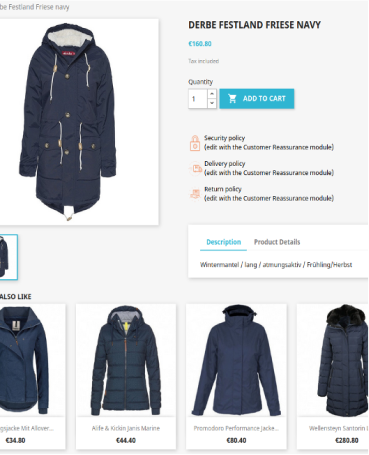
Peter acted as the project manager and key data scientist on this project, leveraging AWS services, Python, and deep learning frameworks like Keras. The project integrated cloud-based solutions using CloudFormation, Lambda, and Gateway for scalable and efficient deployment, using SQL and DynamoDB for data management.
For the Austrian Institute of Technology (as a part of the national research project LARAH), a prototype of an assistance system for visual indoor localization for disabled and elderly persons was developed. By leveraging Computer Vision and Deep Learning, innovative algorithms for position determination were implemented. The project resulted in a functional prototype, including two Android applications for real-time localization. Key elements included:
- visual recognition of persons using Deep-Learning models
- visual reconstruction and localization of indoor environments using Structure-from-Motion and Machine Learning algorithms
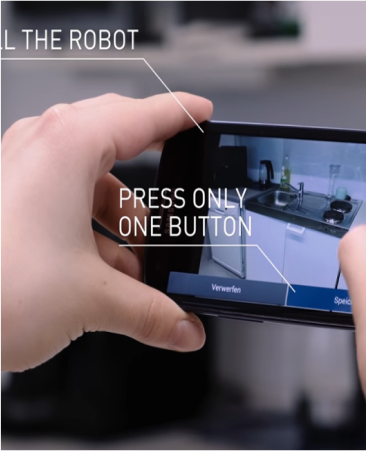
Peter acted as the project manager and key data scientist on this project, developed under Python using Deep Learning models like TensorFlow, custom-developed Structure-from-Motion software and custom camera calibration software. Additionally, as a part of the project, two Android apps were modified and integrated together onto the Robot Operating System on the mobile platform.
This is a post-quantum-aware X.509 analysis toolkit, built with AI pair-programming and used as
the working laboratory for a governance regime around AI-written code: per-release SAST
and DAST with a written reason for anything left unfixed, an EU AI Act scoping
assessment of the product, and a documented risk review of the AI vendor it depends on.
https://gitlab.com/umi-ch/cert-grep
https://gitlab.com/umi-ch/cert-grep/-/tree/main/insights
- AI Transformation
- Automation
- Infrastructure Management
- Human-Technology Interaction
This is a desktop client for Claude and other popular LLM frontier models. It provides a simple system prompt but also predefined (and customizable) per-turn "curiosity riders" (injection) as separate controls, alongside a running cost meter. Built so a client can watch what prompt design actually changes — in the answer, and on the bill — instead of being told.
https://github.com/John-D-B/Curiosity-Lab-for-Claude
- AI Strategy
- Customer Interaction
- Human-Technology Interaction
A page-capture utility distributed both as a command-line tool and as a Claude Code skill and plugin, with strict invocation rules so that an agent knows when not to run it. Shipped with a published security assessment and disclosed residual risk.
https://github.com/John-D-B/web-print
- AI Transformation
- Governance
- Infrastructure Management
- Human-Technology Interaction
Code developed with AI assistance, submitted to Keyfactor's open-source EJBCA cert-manager issuer and merged by its own maintainers in March 2026. An external check on whether AI-assisted work survives review by people with no stake in the method. AI pair-programming saved substantial amounts of time and know-how onboarding in order to fix this relatively simple problem.
https://github.com/John-D-B/ejbca-cert-manager-issuer
https://github.com/John-D-B/ejbca-ce
As part of the MIT Sloan School of Management and MIT CSAIL Executive Program “Artificial Intelligence: Implications for Business Strategy”, Gerold developed and evaluated AI and robotics use cases for a global facilities management company.
The work focused on translating emerging AI capabilities into concrete enterprise applications: identifying suitable business and operational processes, assessing potential value and feasibility, and considering the organizational implications of introducing AI, automation and robotics at enterprise scale.
Rather than starting with technology in search of a problem, the approach focused on where AI and robotics could address real operational challenges and create measurable business value. The project laid the foundation for Gerold’s continuing focus on bridging AI strategy, business requirements and practical implementation.
AI Strategy & Use Case Development, AI opportunity assessment, business value analysis, Robotics & Automation
Gerold designed and developed concepts and prototypes for RAG-based AI assistants that make fragmented organizational knowledge accessible through natural-language interaction.
The solutions combine internal documents, structured information and expert knowledge with Large Language Models, semantic search and retrieval-augmented generation. The focus is not only on the underlying technology, but on creating a reliable end-to-end solution: from identifying and structuring relevant knowledge sources to retrieval architecture, user experience, access concepts and governance.
The work demonstrates how Generative AI can transform static document repositories into practical knowledge systems that support employees in finding information faster, preserving expert knowledge and making better-informed decisions.
AI Strategy & Solution Design, Generative AI, LLMs, RAG, Prompt Design, Knowledge Management
Gerold established and led a global Test Center of Excellence for a global corporation, creating a scalable quality engineering framework across projects, teams and delivery environments.
The initiative covered test strategy, governance, KPIs, test automation, regression testing, Shift Left and Continuous Testing, as well as the integration of quality engineering into agile and DevOps delivery models.
As part of the further evolution of the testing approach, Gerold introduced AI-assisted testing and explored the practical use of Generative AI for creating software test cases. This connected established enterprise quality engineering with emerging AI capabilities and provided a concrete application of Generative AI within the software delivery lifecycle.
The project demonstrates his ability to introduce new technologies within the governance, processes and operating model required for enterprise-scale adoption.
Global Test Lead, Generative AI, AI-assisted testing, test case generation, Test Automation, DevOps, CI/CD, SAFe, Continuous Testing, Quality Governance
Platform providing up-to-date status of compliance with safety/security/AI regulations for an enterprise-wide product portfolio, specifically for product safety, cybersecurity, and EU AI Act compliance. Including features for AI-assisted document generation and review as well als cybersecurity incident response post-launch.
End-to-end from concept to scaled introduction and operation.
Web app for live events and keynotes where audiences can interact, vote, and chat. Mixture of scripted presentations with multi-LLM powered stories that take the 'pick-your-own-adventure' approach to a modern, audience- and presenter-driven narrative. Specifically targeted at workshops and scenarios about the future of AI and society.
Concept, development
- AI Security
- AI Transformation
- Ethics
For a public transportation network, the objective was to optimize the monitoring of their legacy electrical switchboards. These decade-old items that are often located in very remote areas are prone to failures and tracking of errors was not possible. The objective was to enable real-time tracking and the recognition of upcoming failures from changed switching behavior. The key elements were:
- Development of specific hardware configuration with custom housings (3D printed) to mount instead of regular switchboard covers;
- Camera control and initial image generation on Raspberry Pi integrated in housing;
- Initial scan of switch layout and labels;
- Identification of switching operations and registration of new positions;
- Identification of irregular switching patterns (delays, other irregularities) to indicate upcoming failures for predictive maintenance;
- Update of central database and cloud solution with last state and observed switching patterns;
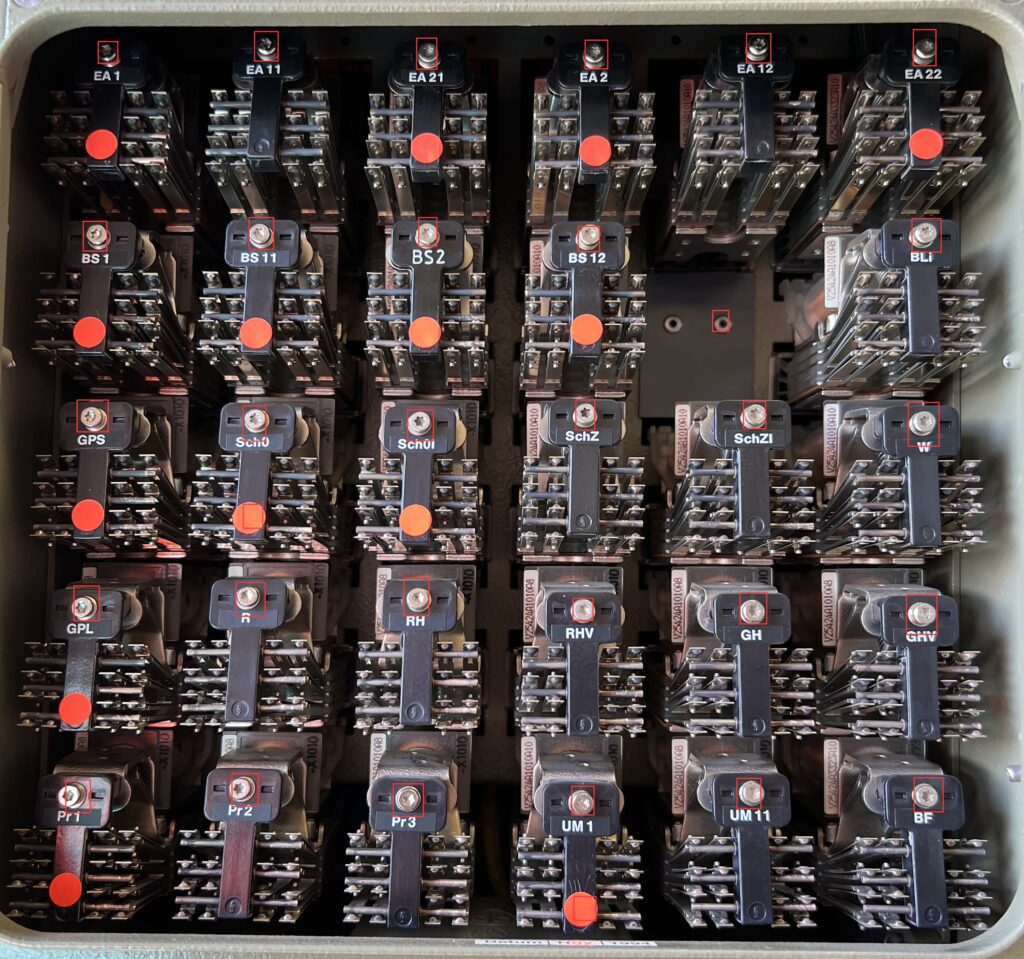
The solution was implemented using Python on Raspberry Pi devices, backbone and cloud processing were done using a LAMP stack, with PyTorch, TensorFlow and OpenCV.
Create an integrated monitoring and surveillance solution for small-scale hydropower plants in remote locations. The solution included a full range of required settings:
- real-time monitoring and logging of operations
- failure detection and automated
- predictive maintenance logic to identify early failure
- camera-based intrusion and irregularity detection
The solution was a hybrid solution using Siemens PLCs, combined with small edge computing elements (Raspberry Pi and Arduino). All primary logic (particularly shutdown and load adjustment) was local, but key decisions and aggregations were executed online based on regular data transmission to a cloud-based management and operations suite.
For a project management SaaS solution where customers were matched with freelancers, a custom AI solution was established with the purpose to improve experiences for all parties. Key purposes were to create an early warning system to help customer service intervene in case of issues:
- Identification of unusual patterns (delays indicating inaction, intense exchanges);
- Flagging of language transgressions on both sides (use of inappropriate language, aggression);
- Matching of final ratings with evaluation of flow and dialogue quality to foster a more honest rating culture;
- Language style matching to improve future matching of freelancers to clients;
The solution was implemented using Python on a LAMP stack, with self-developed machine learning libraries.
Arduino-based, with edge ml functionality and periodic link via BLE to connected phone. Machine learning algorithms on cloud detecting various health states and delivering alerts to phone or web app. All logic woven into a cotton fabric wristband.
The objective of this project was to identify approaches on integration automation approaches and AI to more stably and reliably document and manage a highly complex IT environment with systems ranging from legacy mainframes to local server farms to cloud services. The objective was a massive simplification of maintaining up-to-date system views, status views and predictive error management.