
Erfolgreich in Zeiten der KI
KI Business Transformation
Künstliche Intelligenz verändert gerade jedes Unternehmen, egal, ob es zu diesem Thema eine Entscheidung trifft. Selbst wenn eine Firma klar "Nein" zu KI sagt, sieht sie sich dennoch mit eingekauften Produkten konfrontiert, die KI ungefragt integrieren. Zudem nutzen viele Mitarbeitende ohne Zustimmung auf eigene Faust KI-Chatbots, notfalls auch auf persönlichen Geräten - ohne jedes Training. Und dann hat auch die Konkurrenz vielleicht plötzlich einen Vorteil, weil sie KI in ihren Produkten oder Geschäftsprozessen erfolgreich einsetzt. So oder so, man kann diesem Thema nicht entkommen, man kann nur wählen, wie man sich ihm stellt. Dieses "wie" definiert die KI-Identität einer Organisation - und damit auch ihre KI-Strategie.
“Herr, die Not ist groß!
Die ich rief, die Geister
Werd ich nun nicht los.”
Der Zauberlehrling, Johann Wolfgang von Goethe (1797/98)
Ihre KI-Identität: mehr als KI-Strategie
9senses hat drei KI-Identitäten definiert, die ein Unternehmen haben kann. Näheres erfahren Sie durch Klicken auf die einzelnen Kacheln oder durch unseren kurzen KI-Identitätstest.
KI-Zögerer
Der KI-Zögerer lässt sich nicht wirklich auf KI ein, aber KI kommt dennoch - eingebettet in eingekaufte Tools oder weil Mitarbeitende KI ohne Autorisierung nutzen.
KI-Sprinter
Der KI-Sprinter geht aufs Ganze - und holt sich die Vorteile von KI ins Haus, aber auch das Risiko, langfristig die Kontrolle zu verlieren.
KI-Weise
Wer KI weise nutzt, findet die richtige Mischung aus Fortschritt und Vorsicht - KI wird zielgerichtet dort eingesetzt, wo sie Mehrwert schafft.
Die zögerliche Haltung fühlt sich zunächst sicher an. Kein Budget wird auf unsichere KI-Experimente verschwendet, keine riskanten Projekte werden gestartet, und der Zugang zu KI-Tools ist für Mitarbeitende blockiert.
Leider wartet KI nicht auf eine Einladung. Sie kommt einfach zu Besuch. Genutzte Software und Infrastruktur haben plötzlich KI-Features integriert, und es wird zunehmend unübersichtlich. Und dann ist da noch das Personal. Laut einer der bislang umfangreichsten Studien zu KI am Arbeitsplatz sagen nur 40 % der Teilnehmenden, dass ihr Arbeitgeber klare Regeln zum KI-Einsatz habe, und fast die Hälfte gibt zu, bei ihrer KI-Nutzung gegen Unternehmensregeln zu verstoßen, einschließlich der Eingabe von Firmeninterna in öffentliche KI-Bots. 57 % der Antwortenden gaben zu, ihren KI-Einsatz ganz zu verheimlichen.
Es gibt keine "ohne KI"-Option
Vor diesem Hintergrund kann man sich zwar davor drücken, zu KI Stellung zu nehmen oder einfach "Nein" sagen, das ändert aber nichts am Risiko. Der EU AI Act ist in Kraft, und ein eingekauftes Produkt oder ein unerlaubt eingesetzter Chat kann plötzlich ein Regelwerk relevant machen, das man nicht einmal gelesen hat.
Wenn Sie uns morgen kontaktieren, würden wir Ihnen nicht zu einem KI-Projekt raten. Unsere Empfehlung wäre, zuerst die Grundlagen zu schaffen. Das bedeutet, dem Topmanagement ein grundlegendes Verständnis von KI zu vermitteln, damit es eine Strategie und erste Governance-Regeln beschließen kann. Dann gehört dazu, ein Inventar dessen zu erstellen, was an KI im Unternehmen bereits im Einsatz ist, daraus die Exposition einzuschätzen, Regeln und Leitplanken zu definieren und ein Mindestmaß an Training und Unterstützung für Mitarbeitende aufzusetzen, die sehr wahrscheinlich bereits hinter Ihrem Rücken KI nutzen.
Machen Sie den KI-Identitätstest und finden Sie heraus, welche KI-Identität Ihr Unternehmen hat - oder vereinbaren Sie ein 15-minütiges Gespräch, um zu erfahren, wie wir Sie unterstützen können.
Der Preis, den KI-Zögerer zahlen
Sie sind den Risiken ausgesetzt, ohne von den Vorteilen zu profitieren. Für die KI-Funktionen in Ihren Tools zahlen Sie trotzdem - ob ihre Nutzung sinnvoll ist oder nicht.
Ein in ein KI-Tool kopierter Vertrag, eine überzeugend formulierte, aber falsche Antwort, die an einen Kunden geht - und der Vorfall trifft auf eine Organisation ohne Regeln und Reaktionsmöglichkeiten. Aber mit voller Verantwortung. Und wenn der Umgang mit KI unvermeidlich wird, starten Sie unter Druck statt im selbstgewählten Tempo.
FAQ für KI-Zögerer
Wir haben uns bewusst gegen KI entschieden. Warum ist das keine mögliche Strategie?
Sich gegen eigene KI-Anwendungen zu entscheiden, ist völlig legitim - oft raten wir Unternehmen genau dazu. Sich gegen KI zu entscheiden, ist unmöglich, weil sie über Tools und unkontrollierte Nutzung dennoch ins Unternehmen kommt. Die KI ist da, ob Sie sich mit ihr auseinandersetzen oder nicht; Sie können nur entscheiden, ob Sie sich absichern.
Können wir die Tools nicht einfach sperren?
Sperren ist die schlechteste aller Entscheidungen. Es verhindert die Nutzung nicht, sondern verlagert sie nur in den unsichtbaren Bereich. Teams oder Einzelne, die Ergebnisse liefern müssen, weichen auf private Geräte aus - oft mit schlechteren Modellen, Problemen mit Datenschutz und Vertraulichkeit und einem vollständigen Verlust der Kontrolle darüber, was passiert. Freigegebene Alternativen, kombiniert mit Training und klaren Regeln, reduzieren unerlaubte Nutzung weitaus wirksamer als ein Verbot.
Was ist der allererste Schritt?
Zuerst müssen Sie KI genügend gut verstehen, um überhaupt einschätzen zu können, was sie kann und was nicht. Dann messen Sie, was bereits da ist: mit einem KI-Inventar, das zeigt, wo KI in Ihrer Organisation im Einsatz ist und wie sie gemanagt wird. Das dauert Tage, nicht Monate. Darauf baut alles Weitere auf.
Auf den ersten Blick ist der KI-Sprinter ganz vorne mit dabei. Er nutzt die neuesten Technologien und kann damit vielleicht sogar erste Erfolge vorweisen. Einige dieser Gewinne sind real; gut eingesetzte KI kann die Effizienz der Mitarbeitenden steigern und den Personalbedarf reduzieren.
Aber oft produzieren viele KI-Prototypen nicht das erwartete Ergebnis, und Unternehmen schalten sie wieder ab. Das Muster dahinter ist immer dasselbe - die KI-Anwendungen werden schneller eingeführt als die Strukturen und Werkzeuge, die sie kontrollierbar machen - von Governance bis zum richtigen Testen.
KI-Sprinter leben oft auf Kosten ihrer Zukunft
Je nach KI-Einsatz treten die Risiken an unterschiedlichen Orten auf. Laut einer BCG-Umfrage bei 70 Top-Managern wird weitherum ein sogenanntes "Deskilling" beobachtet, das Verlernen von Fähigkeiten, die man an die KI delegiert. Ebenso wird oberflächlich toll aufbereiteter aber inhaltsarmer Output beklagt - ein Kernmerkmal von KI. Das im Griff zu behalten und das Unternehmen auf eine effektive KI-Nutzung zu trimmen, ist harte Arbeit.
Manche Unternehmen, die KI erfolgreich nutzen, reduzieren Personal, oft werden weniger Berufseinsteiger eingestellt. Die Rechnung dafür kommt später: wenn niemand mehr die gesamten Abläufe des Geschäfts kennt und KI-Ergebnisse zuverlässig beurteilen kann. Wir nennen das „KI-Schulden“: kurzfristig gewinnt man, langfristig zieht man sich den Boden unter den Füßen weg.
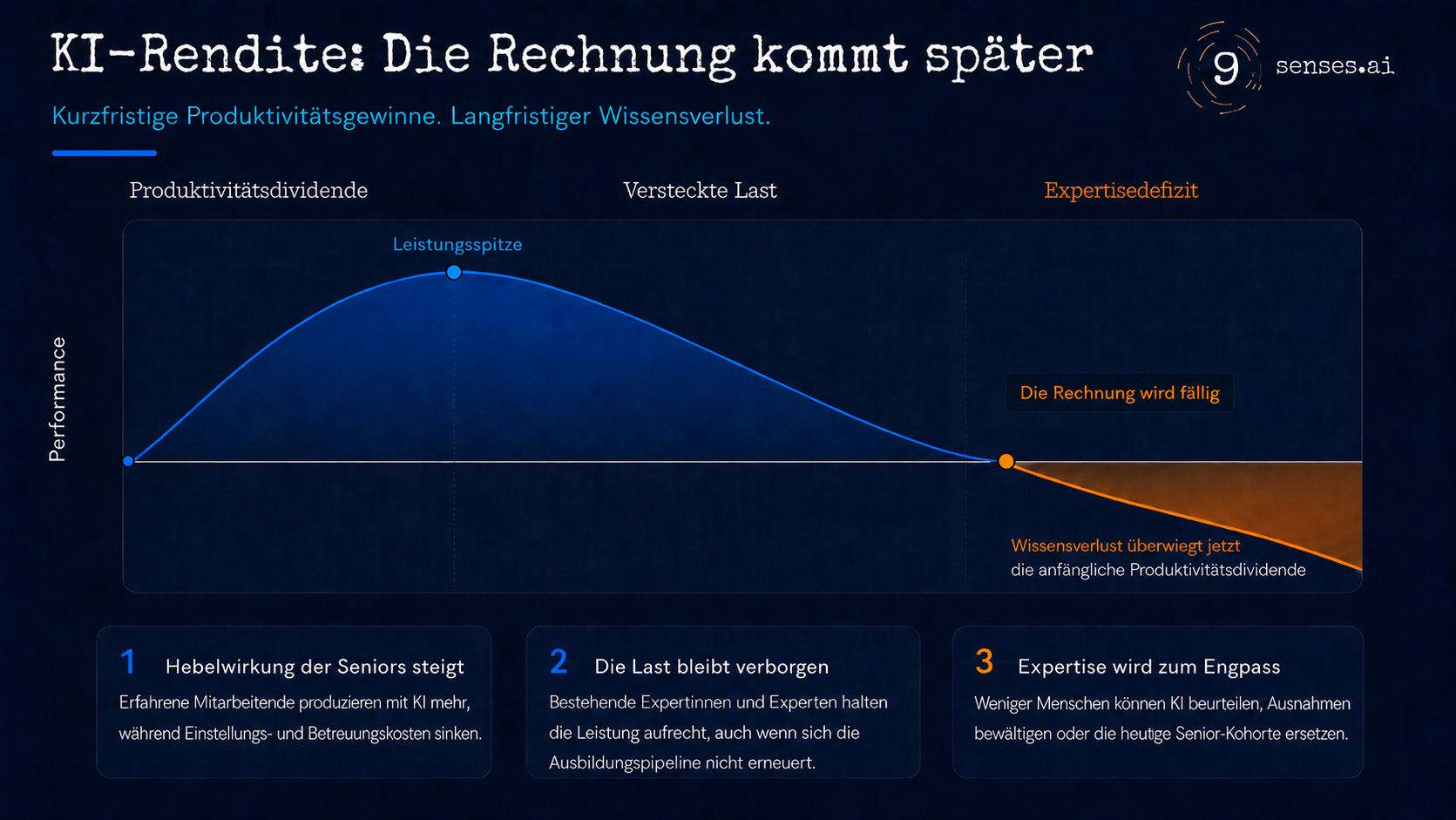
Wenn sich ein KI-Sprinter bei uns meldet, raten wir in der Regel dazu, weitere KI-Rollouts zunächst auf Eis zu legen, bis KI-Fundament und KI-Basis stark genug sind, um den KI-Einsatz einschätzen und steuern zu können.
Der Preis, den KI-Sprinter zahlen
Jede weitere KI-Anwendung auf dieser Grundlage erhöht die Exposition, während Steuerung und Kontrolle hinterherhinken. Ein „KI-Unfall“ trifft dann auf eine weitgehend unvorbereitete Organisation.
Weitere Risiken sind hohe Verluste für abgebrochene KI-Projekte, generell unklare Auswirkungen von KI auf das Geschäft und möglicher Kompetenzverlust durch Deskilling, den Verlust des kritischen Denkens bei wichtigen Mitarbeitenden.
Fragen von KI-Sprintern
Wir sehen echte Produktivitätsgewinne. Warum sollten wir was ändern?
Die Gewinne sind nicht das Problem. Das Problem ist die Exposition. Sie zu reduzieren bedeutet nicht, etwas aufzugeben, sondern das Erreichte abzusichern und ein Fundament zu schaffen, das über kurzfristige Erfolge hinaus Bestand hat.
Bremst uns Governance nicht aus?
Die Erfahrung spricht dagegen. Nur sehr wenige KI-Projekte schaffen dauerhaften Mehrwert. Erfolgreich sind Initiativen mit klar definiertem Zweck, klaren Erfolgskriterien, klaren Go-/No-Go-Entscheidungen zu den richtigen Zeitpunkten und guter Governance. Diese Struktur kostet wenig im Vergleich zum Risiko, die Kontrolle an KI abzugeben.
Welche laufenden Anwendungen sollten wir zuerst prüfen?
Am kritischsten sind Anwendungen mit generativer KI, Machine Learning oder Agentic AI, deren Ergebnisse nicht regelmäßig von Menschen geprüft werden und die nicht kontinuierlich getestet werden. Genau dort entstehen gerne mal falsche Ergebnisse, die niemand bemerkt.
In Bezug auf KI "weise" zu sein hat nichts damit zu tun, wie viel KI im Einsatz ist. Es bedeutet vielmehr, dass man für KI bereit ist. Zuerst einmal bedeutet es, dass alle Mitarbeitenden mit potentieller Nutzung, einschließlich des Topmanagements, künstliche Intelligenz genügend gut verstehen, um ihre Vorteile, Grenzen und Risiken zu kennen.
Dazu gehört auch zu wissen, wo KI bereits im Einsatz ist, und die Risiken zu steuern - besonders bei generativer KI für allgemeine Geschäftsaufgaben oder bei Agenten, die Daten verarbeiten und Entscheidungen treffen. Heute ist es auch wichtig, gewisse KI-Tools zur Verfügung zu stellen. Das ist viel besser als Mitarbeitende, die KI sonst unkontrolliert im Verborgenen nutzen. Und es braucht Governance, damit KI dem Geschäft nicht unbemerkt schadet, und kontinuierliches Testen von KI-Anwendungen im laufenden Betrieb.
Im Gleichgewicht bleiben
KI-Weise zu sein bedeutet, KI-Weise zu bleiben. KI-Modelle ändern sich, Anbieter ergänzen Funktionen, Preise, Konditionen, Richtlinien und Gesetze werden angepasst, Menschen kommen und gehen. Damit verschiebt sich auch die Exposition. Die Position muss deshalb regelmäßig neu bewertet und gegebenenfalls angepasst werden. Darum ist KI-Transformation für uns ein Regelkreis. Ein weise handelndes Unternehmen hält diesen Kreislauf in Gang.
Melden Sie sich, wenn Sie KI-Weise werden wollen - es ist einfacher, als Sie denken.
Was KI-Weise Unternehmen gewinnen
KI-Weise Unternehmen nutzen KI, ohne ihren langfristigen Erfolg zu gefährden.
Mit einem soliden KI-Fundament und einer klaren KI-Basis sorgen sie für eine kontrollierte Einführung und gute Governance. So scheitern schlechte KI-Initiativen früh - und die guten kommen weiter.
Grundlage dafür sind KI-Kompetenz, ein Verständnis von Nutzen und Risiken und klar definierte Governance.
Häufige Fragen
Ist KI-Weisheit nur ein anderes Wort für „langsamer“?
KI-Weise zu sein sagt nichts über das Tempo aus. Ein Unternehmen kann KI gezielt dort einführen, wo sie sinnvoll ist - oder außerhalb allgemeiner Tools für Mitarbeitende weitgehend darauf verzichten. Beides kann weise sein. Jede Firma hat diese Wahl.
Brauchen wir einen Chief AI Officer?
Nicht unbedingt. Aber ein Unternehmen braucht KI-Kompetenz auf allen Managementebenen und klare Entscheidungsbefugnisse für KI-Projekte. Die organisatorische Form ist zweitrangig; Kompetenz und Agilität zählen.
Wie behalten wir die rasante Entwicklung der KI im Griff?
Das ist anspruchsvoll: KI-Modelle ändern sich unter der Haube fast täglich, und KI hält in immer mehr Produkten Einzug - von Software bis hin zu Geräten. Das braucht Monitoring, regelmäßige Reviews und einen anderen Testansatz: Bei KI ist jeder Tag "Release Day".
KI-Weise bedeutet, sich weder von KI überrollen zu lassen noch sie ziellos einzusetzen. Dafür braucht es ein gründliches Verständnis von KI, ihrem Nutzen und ihren Grenzen. Auf dieser Basis wird KI bewusst und zielgerichtet eingesetzt - mit klaren Leitplanken und der Fähigkeit, schnell nachzusteuern.
KI-Weise werden: die Bausteine
Drei Elemente definieren den Umgang mit KI. Die ersten beiden braucht jede Firma - auch ohne eigene KI-Initiativen. KI-Substanz, also eigene KI-Projekte, ist optional.
KI-Fundament
Das KI-Fundament sorgt für festen Stand. Es definiert die strategische Positionierung, KI-Governance und Ownership, Regeln und Leitplanken. Es beinhaltet auch eine Bewertung des aktuellen Risikos.
KI-Basis
Die KI-Basis macht einfache KI-Tools im gesamten Unternehmen verfügbar. Sie sichert die Nutzung mit KI-Kompetenz, Nutzungsregeln und Steuerung ab, einschließlich des laufenden Risikomanagements.
KI-Substanz
KI-Substanz bleibt eine bewusste Wahl. Sie umfasst konkrete KI-Anwendungen in Produkten oder Geschäftsprozessen. Sie werden bewusst eingeführt - dort, wo KI messbaren Geschäftswert schaffen kann.
Vier Schlüsselelemente bilden den Kern des KI-Fundaments.
KI-Strategie
Die strategische Positionierung legt fest, wo KI hingehört und wo nicht. Sie setzt KI-Kompetenz im Topmanagement voraus und definiert die KI-Strategie des Unternehmens. Diese wird laufend angepasst, wenn sich die Technologie verändert, und gibt die Leitprinzipien für die Einführung von KI vor.
KI-Governance und Ownership
Diese Ebene ist verpflichtend. Sie legt fest, wer über "Ja" und "Nein" entscheidet und wie diese Entscheidungen getroffen und verantwortet werden. Niemand kann sich hinter "die KI war's" verstecken – erste Gerichtsurteile bestätigen das.
Regeln und Leitplanken
Gesetze wie der EU AI Act und der Datenschutz sind nur die Untergrenze. Die meisten Leitplanken sind Geschäftsentscheidungen: Welche Daten dürfen in welche Tools? Welche KI-Nutzungen und Entscheidungen müssen dokumentiert werden? Was ist tabu?
Risikobewertung
Die Risikobewertung beginnt mit der Exposition. Ein KI-Inventar zeigt, welche KI bereits im Unternehmen ist, auch ohne irgendeine Entscheidung dafür oder dagegen. Dabei wird grob bewertet, welche Auswirkungen sie auf das Geschäft und das Risikoprofil haben kann. Darauf bauen auch die strategische Positionierung und die Regeln auf.
Das 9senses Programm
"KI-Fundament"
Das 9senses Programm "KI-Fundament" schafft in weniger als zwei Monaten solide KI-Grundlagen.
Es besteht aus drei wesentlichen Elementen:
- Ein KI-Inventar mit Expositionsprüfung erfasst sichtbare und verborgene KI und bewertet mögliche Auswirkungen auf Geschäft und Risiko.
- Der AI Foundation Day - ein strukturiertes Offsite-Meeting für die oberste Führungsebene mit folgenden Ergebnissen:
- KI-Wissensaufbau zu Potenzial, Grenzen und Risiken;
- Festlegen einer ersten KI-Strategie;
- auf Basis von Strategie und Exposition die Roadmap für KI-Fundament und KI-Basis definieren.
- Ein schriftlicher Bericht mit den vereinbarten nächsten Schritten: Vorschläge für Governance, Ownership und Leitplanken, Ergebnisse der Risikobewertung und die Roadmap zur KI-Basis.
FAQ zum KI-Fundament
Ist das ein großes Compliance-Projekt?
Nein. Ein funktionierendes KI-Fundament braucht Wissensaufbau, ein KI-Inventar, strategische Positionierung, Leitplanken und einen Überblick über die Risiken. Für die meisten Unternehmen ist das in weniger als zwei Monaten zu erreichen.
Wir haben bereits IT-Governance. Reicht das nicht?
KI funktioniert grundlegend anders als klassische IT, deren Entscheidungen sich nachvollziehen und reproduzieren lassen. KI reagiert flexibel, ohne vollständig reproduzierbare Logik. Damit fallen viele Grundlagen weg, auf denen IT-Governance beruht. Deshalb braucht KI eigene Regeln und Testprotokolle.
Was verlangt der EU AI Act aktuell von uns?
Stand heute sind verbotene Praktiken zu unterlassen, darunter Emotionserkennung am Arbeitsplatz - auch in eingekauften Produkten. Ab Dezember 2027 gelten sämtliche Hochrisiko-Pflichten, sofern Ihre KI-Nutzung darunterfällt, zum Beispiel im Personalbereich.
Wie finden wir die KI, die bereits im Einsatz ist?
Gehen Sie zunächst davon aus, dass es bei Ihnen ähnlich aussieht wie in anderen Unternehmen. Dann fragen Sie - ohne Schuldzuweisung, damit ehrlich geantwortet wird. Die Release Notes Ihrer Anbieter zeigen, wie viel KI über Updates bestehender Software hereingekommen ist. Ein KI-Inventar muss deshalb auch laufend aktualisiert werden.
Ist das nur etwas für große Unternehmen?
Nein. Das KI-Fundament benötigt unabhängig von der Unternehmensgröße etwa zwei Monate, weil das Tempo vor allem von Terminplanung und Reporting bestimmt wird. Was sich ändert, ist der Aufwand - und damit die Kosten für Inventar, Interviews und Dokumentation.
Die KI-Basis definiert Tools und Regeln für die gesamte Organisation. Zwar könnten Sie theoretisch auf eigene KI-Tools verzichten - damit steigt aber das Risiko ungeregelter Nutzung durch Mitarbeitende. Deshalb ist eine nutzbringende freigegebene Alternative zu Online-Chats meist der beste Weg, unerlaubte Nutzung zu reduzieren.
Freigegebene Tools
Freigegebene Tools sind ein praxistaugliches KI-Toolset, das Mitarbeitende sicher nutzen können - passend zur Arbeit und zu Ihren Datenschutzanforderungen. Eine gute Alternative reduziert unerlaubte Nutzung am wirksamsten. Die Tools müssen laufend bewertet werden, damit sie nicht veralten; es braucht klare Upgrade- und Testpfade. Oft kommen auch lokal betriebene Modelle in Frage; dann bleiben kritische Daten im Unternehmen und viele Datenschutz- und Compliance-Risiken entfallen, weil nichts in die Cloud wandert.
KI-Kompetenz
Wer nicht versteht, wie KI funktioniert, produziert im Handumdrehen toll aussehende Ergebnisse ohne Tiefgang. KI-Kompetenz bedeutet deshalb nicht nur, die Tools bedienen zu können, sondern ihre Fehlermodi zu kennen, wie zum Beispiel überzeugend falsche Antworten oder Feedbacks, die sich bei jeder Anfrage ändern. Wer das versteht, erzielt bessere Ergebnisse und behält die Kontrolle.
Nutzungsregeln
Mit einem soliden KI-Toolset werden klare Regeln meist akzeptiert. Sie legen fest, welche Daten in welche Tools dürfen, was tabu ist und wie KI-Nutzung geprüft und dokumentiert wird.
Die letzten beiden Punkte sind besonders wichtig. Bei geschäftsrelevanten Ergebnissen - intern oder gegenüber Kunden - muss KI-Nutzung dokumentiert und das Ergebnis zumindest stichprobenartig geprüft werden. Es darf nicht einfach in Entscheidungen einfließen; die letzte Entscheidung sollte transparent sein und in der Regel beim Menschen bleiben. Das schützt rechtlich und erhält die Fähigkeiten, die das Unternehmen langfristig braucht.
Steuerung
Steuerung braucht ein aktuelles KI-Inventar, einschließlich dessen, was Mitarbeitende selbst eingeführt haben, sowie Transparenz über Nutzung, Verbreitung, Qualität, Vorfälle und Veränderungen. Dazu gehört ein laufendes Risikomanagement: Was passiert bei Modell-, Konditions- oder Preisänderungen eines wichtigen Anbieters, oder wenn ein Tool morgen abgeschaltet werden muss? Und wie bleiben die nötigen Kompetenzen erhalten? Es geht nicht um Überwachung, sondern um Transparenz und Steuerung. Was Sie nicht sehen, können Sie nicht absichern.
Das 9senses Programm
"KI-Basis"
Das Programm "KI-Basis" ist der nächste Schritt, sobald das KI-Fundament steht. In funktionsübergreifenden Workshops werden folgende Elemente bewertet und definiert:
- Ein freigegebenes KI-Toolset für den allgemeinen Gebrauch, besonders für Mitarbeitende, die sonst zu unerlaubten Tools greifen würden. Das kann Cloud-Zugang zu LLMs sein, ebenso aber auch lokal betriebene Modelle, bei denen kritische Daten im Unternehmen bleiben.
- KI-Regeln und -Verfahren für erlaubte und unerlaubte Nutzung sowie Deklarationspflichten und Leitplanken für KI-generierte oder KI-gestützte Ergebnisse.
- Regelmäßige, kurze Schulungen zur KI-Kompetenz, die mit Tools und Nutzung Schritt halten.
- Governance und Steuerung, die Transparenz über KI-Nutzung, Qualität, Vorfälle und Veränderungen erhalten, laufende KI-Risiken steuern und die Einhaltung interner und externer Regeln überwachen.
Die Planungsphase dauert typischerweise 2-3 Monate, für den Rollout (Tool-Bereitstellung und Training) werden weitere 3-6 Monate benötigt.
FAQ zur KI-Basis
Welche Tools sollten wir freigeben?
Die, die zu Ihren Datenschutzanforderungen und zur tatsächlichen Arbeit passen. Wir sind herstellerunabhängig; deshalb kann die Antwort je nach Unternehmen anders ausfallen. Oft lautet sie: weniger, als Sie denken. LLMs in der Cloud sind optional, es gibt kostengünstige Alternativen für den lokalen Betrieb.
Wie viel Training ist genug?
Da sich Tools schnell ändern, funktioniert ein Basistraining mit kurzen Auffrischungen alle paar Monate am besten. Wer mit KI arbeitet, muss die aktuellen Möglichkeiten kennen und richtig prompten können - vor allem aber wissen, was KI kann und wo sie versagt.
KI-Substanz entsteht dort, wo KI gezielt Wert schaffen soll - in Produkten oder Geschäftsprozessen. Diese Ebene ist optional, kann aber viel bringen: bei Kundeninteraktion, Abläufen oder im Daten- und Wissensmanagement.
Sorgfältig auswählen - Fall für Fall
Entscheidend ist, Menschen, Prozesse, klassische IT und die KI-Lösung als einen Ablauf zu gestalten. Klar definierte Quality Gates verhindern, was viele Unternehmen gerade erleben: Prototypen, die nie in Produktion hätten gehen dürfen; Releases, die nur in ausgewählten Tests funktionieren; Lösungen, die sich nach dem Launch unbemerkt verschlechtern.
Testen ist kein Meilenstein, sondern ein Kreislauf
Anders als klassische IT-Anwendungen erreichen KI-Lösungen keinen stabilen Endzustand. Sobald sich etwas ändert, müssen sie erneut an ihren ursprünglichen Zielen gemessen werden. Änderungen gibt es täglich: neue Modelle, andere Kontextfenster beim Anbieter oder neue Eingaben aus zusätzlichen Daten.
9senses KI-Audit- und Testing-Services
9senses kann auch komplexe KI-Lösungen umsetzen, wenn der normale Ansatz nicht reicht. Unser Schwerpunkt liegt aber auf Audit und Testing. Dafür haben wir das passende Instrumentarium - vom GenAI-Auditing-Framework bis zu kontinuierlichen Tests, die Veränderungen der Output-Qualität in Echtzeit sichtbar machen.
Häufige Fragen
Wie viele KI-Initiativen brauchen wir?
So viele, die echten Mehrwert bringen und sicher abgedeckt werden können. Für die meisten Unternehmen ist das weniger, als man denkt. Was wirklich Wert schafft, geht in Produktion.
Selbst bauen oder kaufen?
Da gibt es keine generelle Antwort - und wir haben kein wirtschaftliches Interesse daran, wie sie ausfällt. Wichtig ist, Testing von Anfang an einzubauen und einen klaren Pfad für eine regelmäßige Prüfung durch Menschen vorzusehen. So funktioniert KI im Alltag zuverlässig.
Wann sollte eine Anwendung abgeschaltet werden?
Wenn die Grundlage für die Einführung nicht mehr gilt: etwa weil sich Modell, Preis oder Workflow negativ verändern oder weil die Ergebnisse die Erwartungen nicht erfüllen. Kontinuierliches Monitoring sorgt dafür, dass das rechtzeitig auffällt.
Der 9senses-Ansatz ist anders
Die großen Unternehmensberatungen sind zu zwei Schlüssen gekommen, denen wir zustimmen: KI-Transformation ist vor allem Arbeit an Menschen und Prozessen, nicht nur an der Technologie. Und sie ist ein laufender Prozess. Die eigenen Studien dieser Beratungen zeigen zudem, dass die überwältigende Mehrheit von KI-Projekten keinen messbaren Ertrag bringt.
Beim Ziel unterscheiden wir uns. Unser Ziel ist KI-Resilienz, nicht möglichst viel KI. Ein vernünftiges Gleichgewicht ist unsere Vorgabe. Dabei sichern Sie die tatsächliche Exposition ab und setzen bewusst genau so viel KI ein, wie sinnvoll ist. Das kann viel sein - oder sehr wenig. Als herstellerunabhängige Berater können wir dabei helfen.
Finden Sie Ihre KI-Identität
14 Fragen in etwa 5 Minuten zeigen, wo Ihr Unternehmen steht. Der Test ist vollständig anonym. Das Ergebnis gibt Ihnen einen klaren Anhaltspunkt; danach entscheiden Sie selbst, ob Sie es herunterladen, mit uns besprechen oder es dabei belassen. Kostenlos und unverbindlich.